 Free kit for indie teams
Ship 500 voiced NPC lines in a weekend.
A four part production kit for small teams who have been rationing dialogue because every extra line has a price attached. Generation runs on your own computer, so a rewritten quest costs you a rerender instead of a new invoice.
We will email the download link plus three short follow-ups, and Studio Notes twice a week. One click unsubscribes from everything.

Four files, one reviewable pipeline.
Condensed from the game dialogue workflows we publish, arranged in the order you actually work through them.
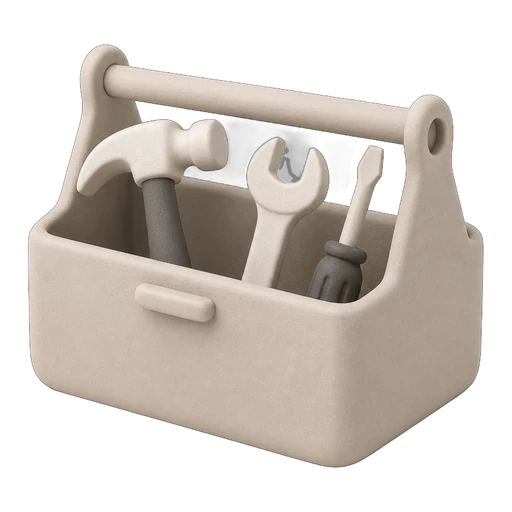
Pipeline checklist
The build lane in order: draft the scene as structured records, validate the IDs, approve the cast, generate, export. Includes the review gates that stop a renamed character from quietly changing voice.

Line-batch spreadsheet template
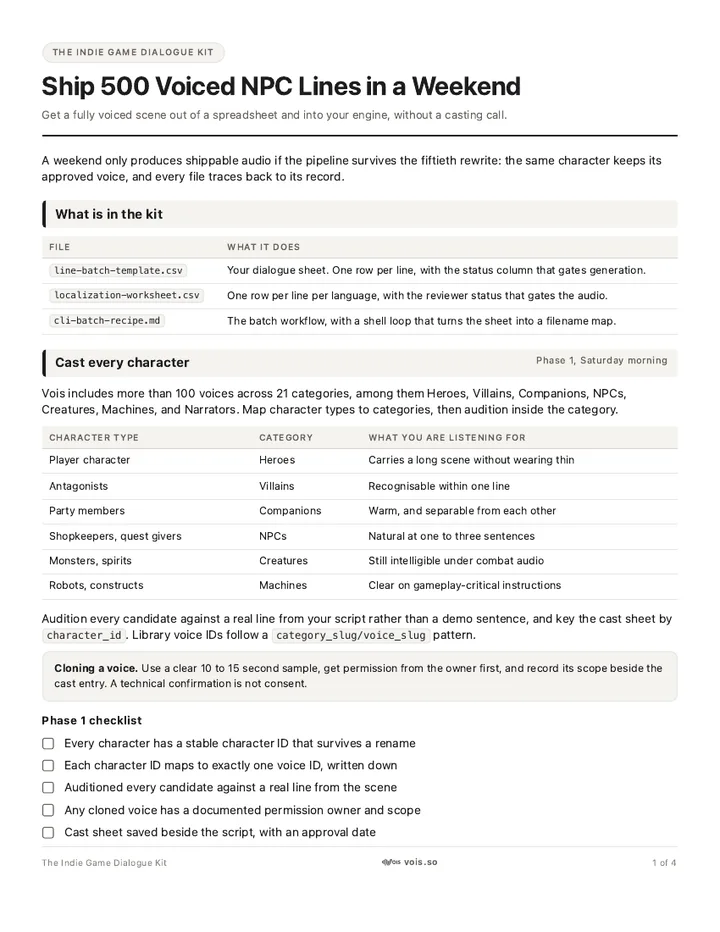
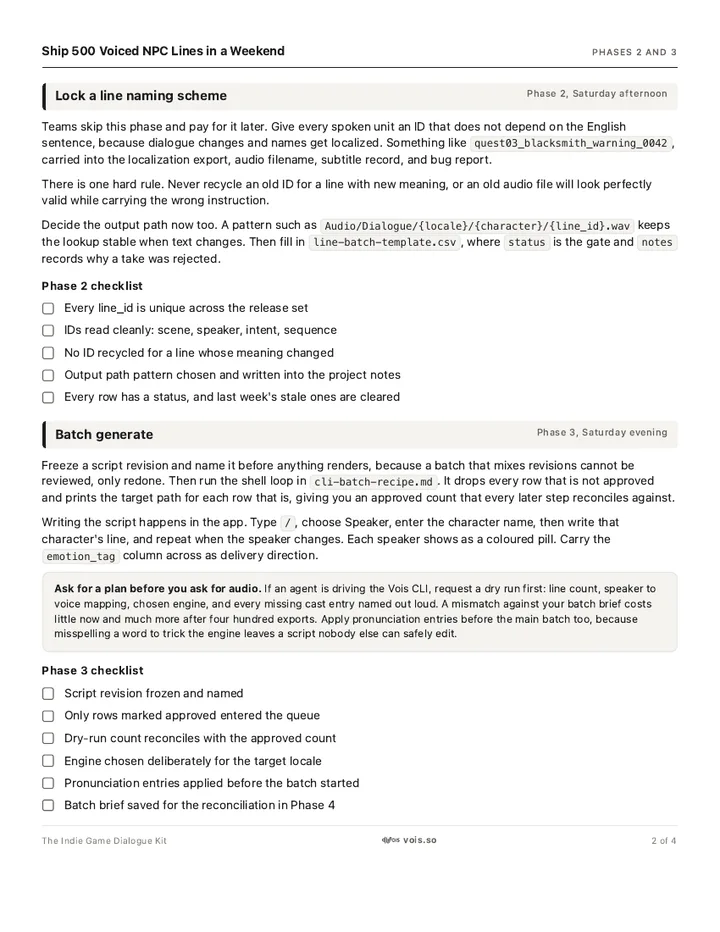
One row per line: stable line ID, character ID, intent, spoken text, locale, scene revision, review status. Only rows marked approved enter the generation queue.

CLI batch recipe
The prompt set for a supervised batch through the Vois CLI: preflight the cast, build the project, generate in groups, then export with deterministic filenames instead of names guessed from dialogue text.

Localization worksheet
The context a translator actually needs per line: speaker, addressee, scene, intent, timing constraint, pronunciation note, and whether the line can be reused. Plus a per locale casting brief.
Most small teams ship silent text boxes.
Line count is the real cost
A fully voiced RPG can carry hundreds of NPC lines, barks, and quest exchanges. Casting, directing, and booking pickups for all of them is usually the reason a small team decides the characters will stay quiet.
Iteration should be free
Game scripts change. Quests get rewritten, dialogue gets pruned, content gets added. When generation happens on your own machine there is no character meter deciding which rewrites are worth it.
Volume needs a process
Cheap generation only helps if the fiftieth rewrite behaves like the first. Stable character IDs, a reviewed cast manifest, and deterministic filenames are what keep a growing script traceable.
Built for the content build, not the runtime
The CLI drives the Vois desktop app on your own machine, so it sits in the build lane beside your other content tooling. Your pipeline produces audio files and a manifest, and the shipped game resolves a dialogue event through that manifest rather than guessing a filename from spoken text. Exports are WAV at 24kHz mono, which drops straight into Unity, Unreal Engine, and Godot.
Cast from the library of 100+ voices across 21 categories, including Heroes, Villains, Companions, NPCs, Creatures, Machines, and Narrators. When a character needs something the library does not carry, clone a voice with a clear 10 to 15 second sample and a documented permission record. Working under NDA on an unannounced title is fine too, because the script never leaves your machine to be voiced.
This is the actual kit.
A zip with a four page guide, the line batch CSV template, the localization worksheet, and the CLI batch recipe.
Questions from indie teams
Get the kit.
Free, no strings. Start with one quest scene rather than the whole game, and let that scene set the bar for the rest.
We will email the download link plus three short follow-ups, and Studio Notes twice a week. One click unsubscribes from everything.