 Free kit for podcasters
Batch a podcast season in a weekend.
Most shows release weekly because the production cycle is weekly. For a scripted season that is a habit, not a requirement. This is the plan that turns one focused production weekend into ten weeks of releases, with the review steps left in.
We will email the download link plus three short follow-ups, and Studio Notes twice a week. One click unsubscribes from everything.

Four worksheets, one season that sounds like one show.
A batched season should sound more consistent, not more automated. These are the decisions you make once and then reuse for every remaining episode.

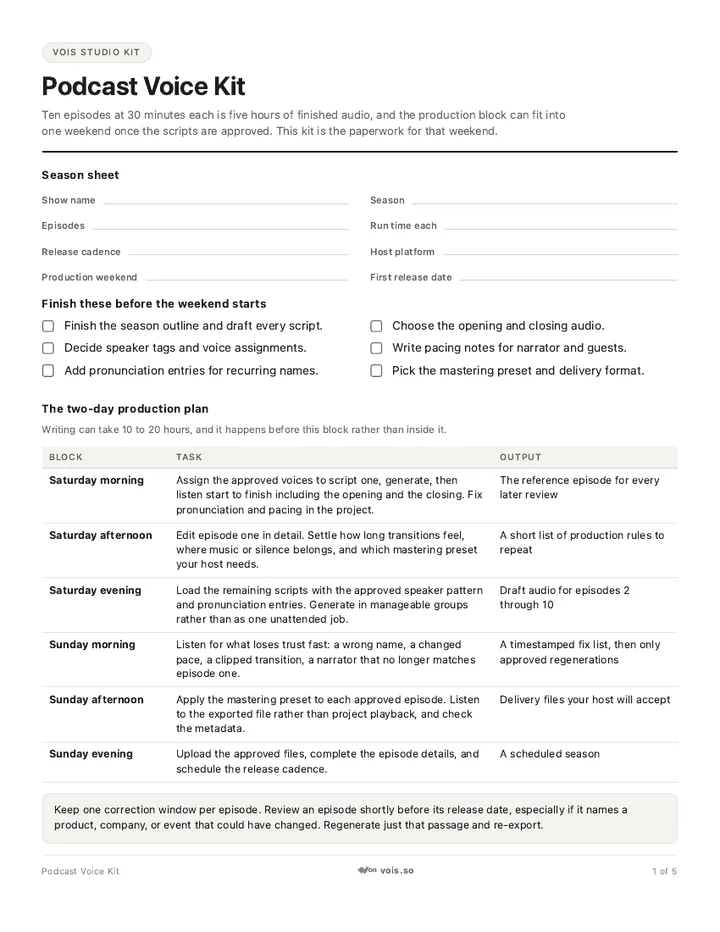
Season batch plan
The two day production order: build one reference episode, approve the production rules from it, prepare the rest in manageable groups, run a single review pass, master, export, schedule.

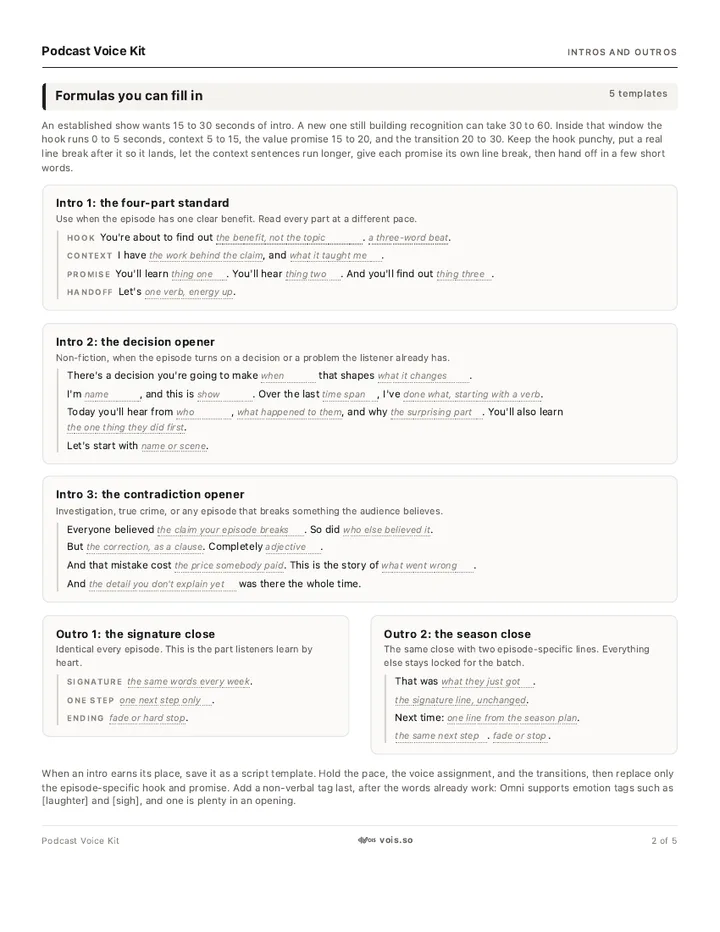
Intro and outro script formulas
A repeatable open and close: a short music bed from the built-in audio library, a familiar spoken cue, a consistent handoff into the topic, then a signature line and one clear next step.
Voice selection worksheet
Test candidates against a 60 second excerpt of your real script, on headphones and on the device your audience actually uses. Then lock the fields that keep the last episode of the season sounding like the first.

Multi-speaker workflow
Speaker tags, a specific secondary voice for each recurring job such as guest segment or announcement, pronunciation entries for names you will say all season, and the cue that tells a listener the role changed.
The weekend is the production block, not the writing.
Ten episodes at 30 minutes each is five hours of finished audio. The scripts behind it may take 10 to 20 hours on their own, before Saturday starts. The kit assumes you did that part first.
Saturday: one reference episode
Assign the approved voices, generate episode one, and listen end to end including the open and close. Fix pronunciation and pacing in the project. Every later review gets compared against this episode.
Saturday night: the rest, in groups
Load the remaining scripts with the approved speaker pattern and pronunciation entries, then generate in manageable groups rather than one unattended job. Prepare show notes while a group processes.
Sunday: review, master, schedule
Listen for the things that lose trust fast: a wrong name, a changed pace, a clipped transition. Note exact timestamps, regenerate only the approved fixes, then master, play the real export, and schedule the drops.
Your voice is the part listeners remember
Recognition is built by repetition. Audiences take somewhere around 10 to 20 episodes to internalize a voice, so changing the narrator or the mastering every few weeks resets the clock you are trying to run. The voice selection worksheet exists to make that decision once, deliberately, and write it down.
Mastering is where consistency becomes audible. Spotify and YouTube commonly target -14 LUFS and Apple Podcasts commonly uses -16 LUFS, though host guidance changes, so check yours before a release. Vois runs loudness normalization, de-essing, EQ, and limiting locally with export presets, which means every episode in the season can finish through the same chain.
This is the actual kit.
Five pages, US Letter, print ready. The season batch plan, the intro and outro script formulas, the voice selection worksheet, and the multi-speaker workflow, in the order you use them.
Questions before you block out the weekend

Get the kit.
Free. Bring a durable ten episode concept and the scripts, and the kit handles the order of operations.
We will email the download link plus three short follow-ups, and Studio Notes twice a week. One click unsubscribes from everything.